
Open today 9 AM – 7 PM Richmond (832) 384-4420
PPB Roofs And Restoration
Membrane Roofing for Flat and Low-Slope Structures

Texans trust

Membrane Roofing for Flat and Low-Slope Structures

TPO, EPDM, and modified bitumen systems installed by a fully insured Fort Bend County crew.

Free estimate

Tell us what you need

Three fields. It reaches a person here, not a call centre.

No obligation · Responds within 1 business day


By submitting this form you agree that we may contact you about your request and share your details with partner companies for marketing purposes.

What to expect

Get started

No obligation, no pressure. Just a straight answer and a fair price.

Call (832) 384-4420Request an estimate

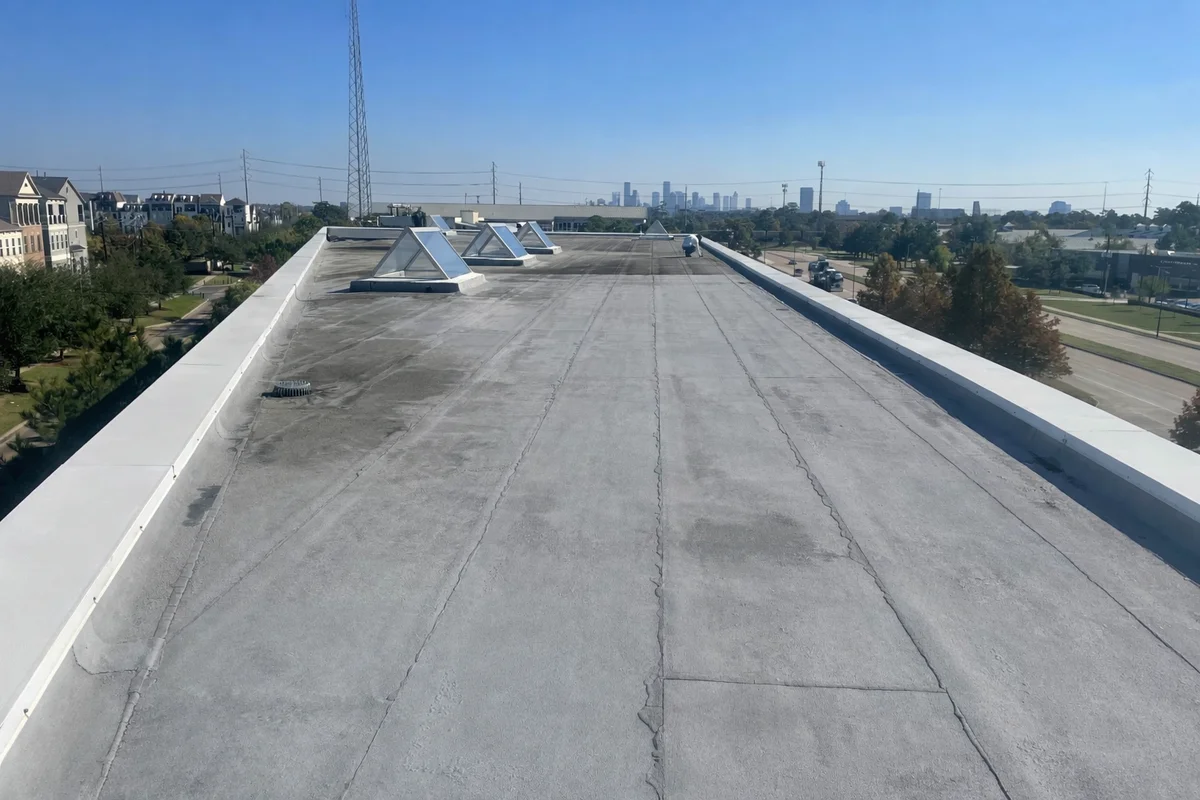
A modified bitumen roof, or any single-ply membrane system, is only as good as the installation behind it. One missed seam on a flat roof and you've got standing water working its way through the deck before the next Houston downpour. We install TPO, EPDM, and modified bitumen systems on flat and low-slope structures throughout Fort Bend County, and every job carries a 10- to 25-year warranty. If your flat roof is leaking or aging out, call (832) 386-9606 and we'll inspect it the same week.

What drives cost on a membrane job is pretty straightforward: square footage, current deck condition, the membrane type you select, and whether we're doing a recover or a full tear-off. Modified bitumen runs in layers and handles thermal movement well. It's a strong choice for Texas heat cycles. TPO reflects UV and welds at the seams, so there's no adhesive to fail over time. EPDM is the most flexible of the three and performs well on larger commercial surfaces. We'll walk you through each option honestly, including which one we'd put on our own building given your specific roof geometry and budget. Every job is different, contact PPB Roofs And Restoration for an accurate estimate.

Membrane Types

Three Systems, One Honest Recommendation

We install all three major membrane types and we'll tell you which one actually fits your roof.

01

TPO (Thermoplastic Polyolefin)

TPO is heat-welded at every seam, which means no adhesive to degrade in the Houston sun. The white membrane reflects UV energy and can reduce attic heat load noticeably during summer. It's our most-requested system for commercial low-slope applications and residential additions with flat decks.

02

EPDM (Ethylene Propylene Diene Terpolymer)

EPDM is a rubber membrane that's been used on commercial roofs for decades because it handles large spans without seaming issues. It stays flexible in cold snaps, which matters less here than in the north, but it resists ponding water and UV degradation across a long service life.

03

Modified Bitumen

Modified bitumen is an asphalt-based system reinforced with polyester or fiberglass and a polymer modifier, usually APP or SBS. It performs well under Texas temperature swings, handles foot traffic better than single-ply membranes, and can be installed as a torch-down or self-adhered system depending on the substrate.

Our Process

How a Membrane Roof Installation Works

  1. Inspection and Scope

    We start with a full deck assessment, checking for soft spots, moisture intrusion, and drain positioning. We won't quote a recover if the deck is compromised. A bad deck under a new membrane is a warranty claim waiting to happen.

  2. Material Selection and Prep

    Once we've agreed on the membrane system, we prep the substrate, pull any failed flashing, and address drain details before a single roll of membrane goes down. The edges and penetrations are where most flat roofs fail, we seal them first.

  3. Installation and Inspection

    We weld or adhere the membrane to spec, then walk every seam and termination point before we call it done. You get a final walkthrough and your warranty documentation on the same day we finish.

What a Failed Membrane Actually Looks Like

Know the signs before a slow leak becomes a structural repair.

  1. 01

    Bubbling or blistering on the surface

    Trapped moisture under the membrane working its way out. The deck below is already wet.

  2. 02

    Separated or lifted seams

    The single most common failure point on any membrane system, especially older adhesive-set installations.

  3. 03

    Pooling water after 48 hours

    Drains blocked or improperly sloped, both accelerate membrane degradation and increase leak risk.

  4. 04

    Flashing pulling away from the parapet

    Edge failures let water track behind the membrane, which is invisible until the decking rots.

Flat Roof Repairs vs. Full Membrane Replacement
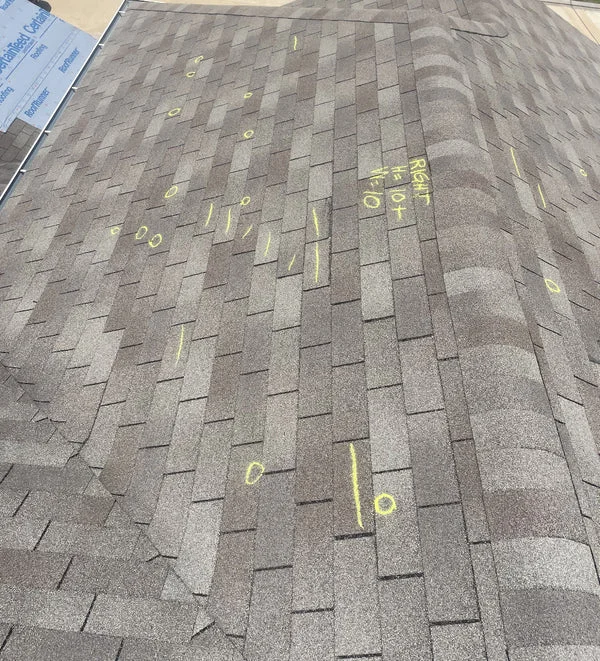
Asphalt shingle roofing with yellow inspection markings visible on the roof surface during an assessment or quality control process.
We won't upsell you on a full replacement when a repair is the right call. If a membrane is less than 10 years old and the damage is isolated to a seam failure or a single penetration, we can reseal and re-weld that section without tearing off the whole system. The honest answer depends on what the deck looks like underneath. If the deck is dry and structurally sound, a targeted repair on a roof repair services scale is often the smarter spend. If we find widespread moisture under the membrane or decking that's soft underfoot in multiple zones, replacement is the only fix that makes financial sense long-term. We'll show you exactly what we find during the inspection. No guessing, no pressure. We've done enough of these to know when a repair buys you five years and when it buys you five months.

Commercial Applications

Membrane Roofing for Fort Bend County Commercial Properties

Fort Bend County is one of the fastest-growing commercial corridors in the Houston metro. Warehouses, strip centers, professional office buildings, and multi-family structures in Sugar Land, Katy, and Rosenberg are all prime candidates for membrane systems, and they all need a contractor who understands commercial roof geometry, drainage design, and HVAC penetration sealing. We've handled commercial roofing on low-slope structures across the area and we carry full insurance on every job. If you're managing a property and the flat roof is due for evaluation, we'll provide a detailed written scope so you know exactly what you're approving before any work starts. Financing is available for qualifying commercial projects.
Roofing contractor applying coating or sealant to a commercial flat roof in an industrial setting with multiple buildings and solar panels visible.

Why the Warranty Actually Matters on a Membrane Roof

A 10-to-25-year warranty means we stand behind every seam we weld.

Most membrane warranty claims happen in the first three years, at the seams, the drains, and the termination points. Those are exactly the details we focus on during installation. A warranty is only worth something if the contractor is still local and accountable when you need to call on it. We're based in Fort Bend County. We're not leaving.
  • 10-25 year warranty on membrane installations

    Covers materials and workmanship

  • Fully insured on every commercial and residential job

    No gaps in liability coverage

  • 5-star rated across 54 Google reviews

    Real customers, verifiable on Google

  • Financing available for qualifying projects

    Ask about options when you call

Schedule a Flat Roof Inspection This Week

Active leak or just overdue for an evaluation? We pick up the phone.

Frequently asked questions

Still have a question?

Ask the team directly. We pick up, and a straight answer costs nothing.

What is a membrane roof and when does it make sense?
A membrane roof is a continuous waterproof layer applied over a flat or low-slope deck, typically TPO, EPDM, or modified bitumen. It's the right system when your roof pitch is under 2:12 and traditional shingles won't shed water properly. Most garages with flat roofs, commercial buildings, and low-slope additions on residential homes require a membrane system to stay watertight.
What is the life expectancy of a TPO or modified bitumen membrane?
A properly installed TPO membrane typically lasts 20 to 30 years. Modified bitumen systems run 15 to 25 years depending on the grade of material and whether the roof gets foot traffic. EPDM sits in a similar range. The caveat on all of them is installation quality. A membrane that's been poorly seamed or has uncorrected drainage problems will fail in five years regardless of what the material spec says.
What are the main disadvantages of a membrane roof?
Membrane roofs are more sensitive to improper installation than sloped shingle roofs. Seam failures, poor drainage slope, and penetrations that aren't sealed correctly are the top failure points. Modified bitumen can crack in extreme cold, though that's rarely a concern in the Houston climate. Ponding water is the other major issue. If your drains aren't positioned correctly, even a quality membrane degrades faster than its rated life.
How do I know if my flat roof needs a full replacement or just a repair?
The test is the deck, not the membrane surface. If the membrane has isolated seam failures but the deck beneath is dry and solid, a targeted repair can extend the roof's life significantly. If we find soft spots, delaminated insulation, or moisture in multiple zones when we do the inspection, those are signs the system has been compromised broadly enough that a repair is a short-term fix at best. We'll tell you which situation you're in after we've seen the roof.
Can a membrane roof be installed over an existing flat roof?
In many cases, yes, a recover (installing a new membrane over the existing system) is code-permissible when the existing membrane is a single layer and the deck is structurally sound. A recover saves the cost of tear-off and disposal. But if there's trapped moisture under the current membrane, a recover seals the problem in rather than fixing it. We check for moisture before recommending that route. A core sample or infrared scan tells us what's there.
Does storm damage affect flat roofs differently than shingle roofs?
It can. High winds can uplift membrane edges and parapet flashings in ways that don't cause visible surface damage but break the waterproof seal. Hail leaves impact marks on single-ply membranes that insurance adjusters are trained to look for. If your building took a hit during a storm, a flat roof inspection should be on the list. The damage won't always be obvious from the ground, and a delayed claim is a harder claim to file.

Related