
Open today 9 AM – 7 PM Richmond (832) 384-4420
PPB Roofs And Restoration
Flat Roofing That Holds Up to Houston Summers

Texans trust

Flat Roofing That Holds Up to Houston Summers

Insured crew, 10-25 year warranty, and a free inspection before any work begins.

Free estimate

Tell us what you need

Three fields. It reaches a person here, not a call centre.

No obligation · Responds within 1 business day


By submitting this form you agree that we may contact you about your request and share your details with partner companies for marketing purposes.

What to expect

Get started

No obligation, no pressure. Just a straight answer and a fair price.

Call (832) 384-4420Request an estimate

Flat roof replacement cost is the first thing most property owners want to know, and the honest answer is: it depends on square footage, the membrane system you choose, and what's underneath when we peel the old one back. What we can tell you upfront is that PPB Roofs and Restoration installs flat roofing systems backed by a 10-25 year warranty, and we've earned a 5-star rating across 54 Google reviews doing this work in the Greater Houston area. If your flat roof is bubbling, pooling water, or coming apart at the seams, call (832) 386-9606 and we'll get eyes on it the same week.

Flat roofing on Texas commercial buildings, covered patios, and low-slope residential additions takes a beating. The Houston heat cycles material through expansion and contraction every single day, and when a storm rolls through, standing water finds every weak seam fast. The right system for your structure depends on slope, existing substrate condition, traffic load, and how long you need it to last. We work with TPO, EPDM, and modified bitumen systems, and we'll walk you through which one makes sense before we quote anything. Cost drivers include deck condition, membrane thickness, insulation requirements, and drain placement. Every job is different -- contact PPB Roofs And Restoration for an accurate estimate. If your property has also taken storm damage alongside the roofing failure, our storm response roofing service handles the full recovery pipeline.

Flat Roof Systems

Three Membrane Options, One Honest Recommendation

We don't push the most expensive system -- we install the one that fits your structure and your climate.
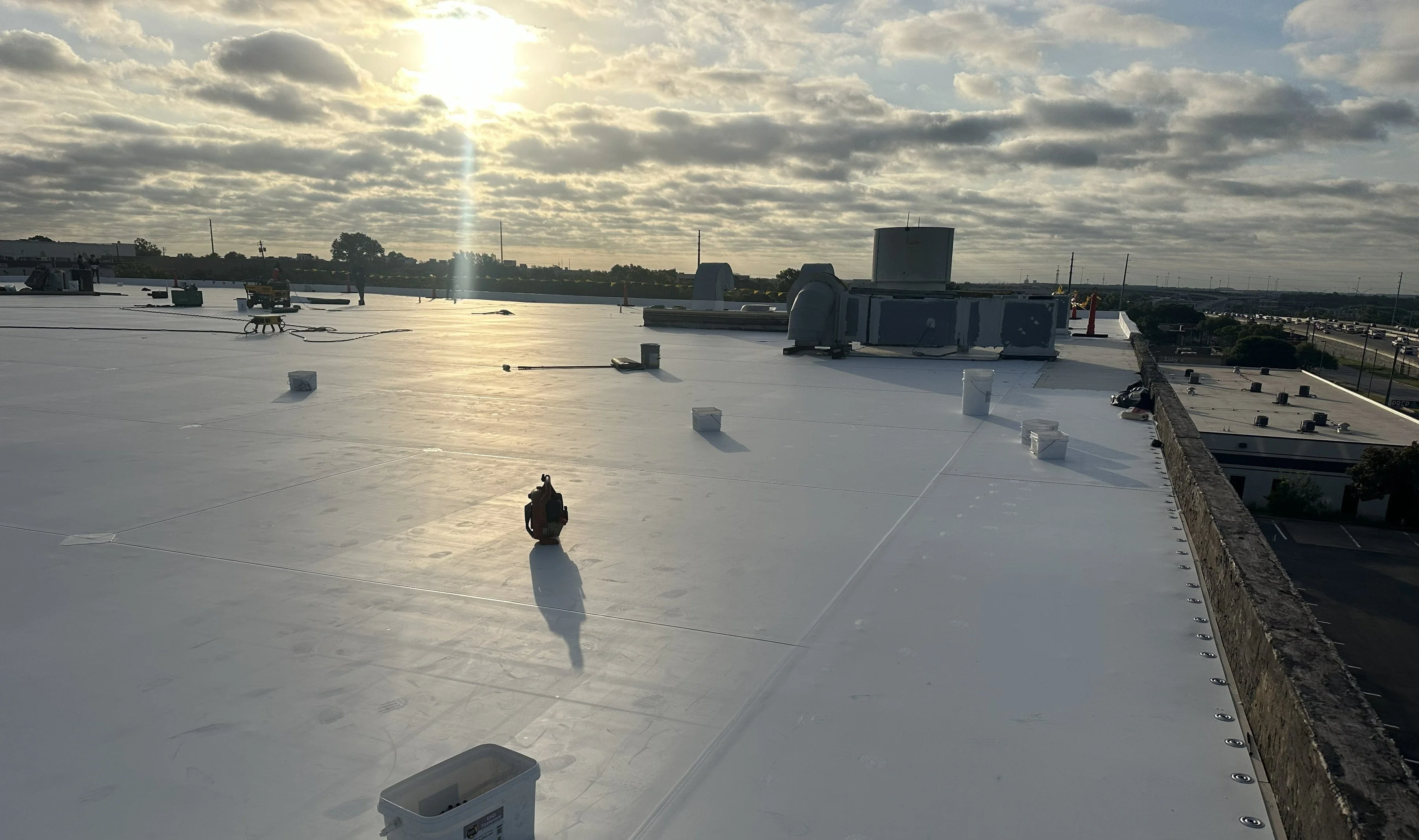
TPO (thermoplastic polyolefin) is the most common flat roofing membrane we install in the Greater Houston area. It reflects UV, it heat-welds at the seams so there's no lap adhesive to fail, and it performs well on low-slope commercial and residential structures. EPDM rubber membrane is a solid choice where flexibility through temperature swings matters more than reflectivity -- it's thicker, quieter in rain, and bonds differently, so substrate prep is critical. Modified bitumen is the legacy system you'll find on older Texas commercial buildings; it's still a strong option for re-roofing over existing layers when the deck is sound. We carry all three and we won't tell you one is right for your building until we've seen the roof and measured the slope. If you're also evaluating membrane roofing for a commercial structure, that page covers the commercial side in more detail.
Flat roof membrane installation in progress on a commercial building overlooking a waterway and industrial area.

Our Process

How a Flat Roof Replacement Actually Works

  1. Inspect and Diagnose

    We start with a roof inspection to document the existing membrane condition, substrate damage, insulation saturation, and drain performance. You get a written report. If the deck is sound, we can often recover over it. If it's rotted or waterlogged, we'll show you exactly what we found.

  2. System Selection and Scope

    We walk you through TPO, EPDM, or modified bitumen based on your building's slope, traffic load, and budget range. We confirm insulation requirements, drain placement, and edge metal details before anything is ordered. No material hits the site until the scope is locked.

  3. Installation and Final Inspection

    The crew installs the membrane system, welds or bonds all seams, sets new drain collars, and runs edge metal from corner to corner. We don't leave a flat roof without testing drainage and doing a seam inspection. Every install is backed by the manufacturer warranty plus our own 10-25 year workmanship coverage.

What Drives Flat Roof Replacement Cost

01

Roof Square Footage

This is the single biggest cost driver. A 500-square-foot patio cover costs a fraction of a 4,000-square-foot commercial flat roof. We measure every job -- no guessing from satellite images.

02

Deck Condition

If the plywood or OSB substrate is saturated or rotted, it has to come out before any membrane goes down. We find this on a lot of Houston roofs that have been leaking for one season too long.

03

Membrane System

TPO, EPDM, and modified bitumen each carry different material costs and install labor. Membrane thickness also matters -- a 60-mil TPO outlasts a 45-mil by years in this climate.

04

Insulation Requirements

Flat roofs on conditioned spaces often need rigid insulation board to meet current energy code. If your existing system has none, that adds material and time -- but it also cuts your cooling load, which matters when Houston summers run five months long.

05

Drain Configuration

Interior drains, scuppers, and gutters all require different edge details and flashing. A roof with two interior drains and no overflow protection is a code issue and a liability -- we fix the drainage system, not just the membrane.

06

Access and Staging

Second-floor commercial roofs or buildings with limited staging areas take more labor time. We account for this in the scope, not as a surprise line item on the invoice.

Why It Matters

Signs Your Flat Roof Needs Attention Now
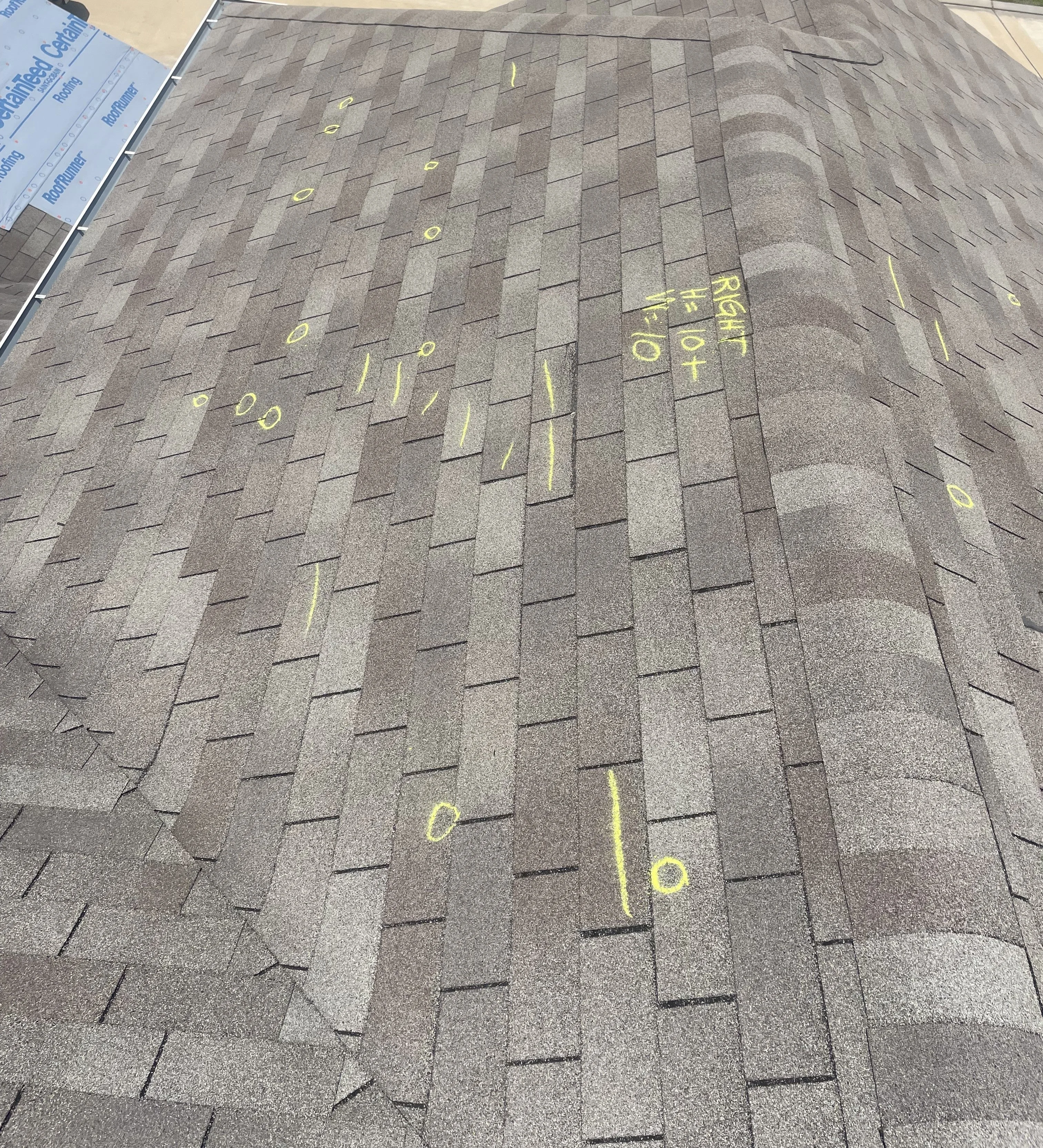
Asphalt shingle roof with yellow inspection markings and chalk notation visible on the exterior roof surface.
Most flat roof failures don't start with a blowout. They start with a small bubble in the membrane that holds water for a week after a storm, softens the substrate underneath, and quietly rots the deck for six months before anyone notices a ceiling stain inside. By the time a flat roof is actively leaking into a building, the repair scope is almost always bigger than it would have been twelve months earlier. We've seen it on commercial buildings and residential additions all across Fort Bend County. If your roof has visible blistering, soft spots when you walk it, standing water more than 48 hours after rain, or seams that have separated at the edge metal, don't wait for the next storm to confirm what you already suspect. A roof inspection report from us gives you a documented condition assessment you can act on -- or use when talking to your insurance carrier. Financing is available if cost is what's holding the decision back.

Flat Roofing Questions We Hear Every Week

Still have a question?

Ask the team directly. We pick up, and a straight answer costs nothing.

What membrane system holds up best on a flat roof in Houston's heat?
TPO is our most-installed system for this climate. The white or light-gray surface reflects UV rather than absorbing it, which keeps membrane temperatures lower during the summer months when surface temps on a dark roof can hit 170 degrees or higher. Heat-welded seams are stronger than adhesive laps, which matters when Houston's thermal cycling pulls at every joint. That said, EPDM is a better fit for certain substrates and roof geometries. We don't pick a system on autopilot.
How do flat roofs drain, and what fails first?
Flat roofs use interior drains, scuppers through the parapet wall, or perimeter gutters to move water off the surface. The drain collar is the most common failure point -- it works loose from the membrane over time and lets water migrate underneath instead of through the drain. On older flat roofs we see this constantly. Secondary overflow drains are a code requirement that many older buildings don't have, which means a blocked primary drain puts the full load of a Houston downpour on the roof membrane.
Can a flat roof be repaired instead of replaced?
Sometimes, yes. If the membrane damage is isolated -- a seam that's lifted, a single puncture, a failed drain collar -- we can repair the affected area without pulling the whole system. The condition of the substrate determines whether repair is worth doing. A membrane in decent shape over a sound deck is repairable. A membrane that's been wet underneath for a year almost always means we're replacing both the membrane and the rotted substrate. We'll tell you which situation you're in after the inspection.
What's the lifespan of a flat roof in Texas?
A properly installed 60-mil TPO or EPDM system in the Greater Houston area should perform for 20 to 30 years with basic maintenance. Modified bitumen systems typically run 15 to 20. The biggest variable is maintenance -- a flat roof with clogged drains and unaddressed seam separations will fail in half that time. Our Prime Protection Plan includes annual inspections that catch these issues before they become failures.
Does a flat roof replacement qualify for insurance coverage after storm damage?
It can, depending on the cause and the policy. Hail and high winds can damage flat roofing membranes, blister TPO, and separate seams -- all of which may be covered under a standard commercial or homeowners policy. The key is documentation. We inspect the roof, photograph the damage, and write a detailed report that gives your adjuster something concrete to evaluate. We've helped a lot of Fort Bend County property owners navigate this process -- it's the same approach we take on every storm damage claim.
Are flat roofs a problem in areas with heavy rainfall like Houston?
Not inherently -- but they have zero margin for drainage errors. A sloped roof sheds water on its own. A flat roof depends entirely on its drain system working correctly, every time. Houston averages 50-plus inches of rain per year and storms that can dump three inches in an hour. That load has to go somewhere fast. We design and install flat roofing drainage to handle the actual rainfall loads this region sees, not a national average.

Get a Flat Roof Inspection Before the Next Storm Hits

Flat roofs don't give much warning. One bad storm and a compromised membrane becomes a flooded interior.

Related