
Texans trust
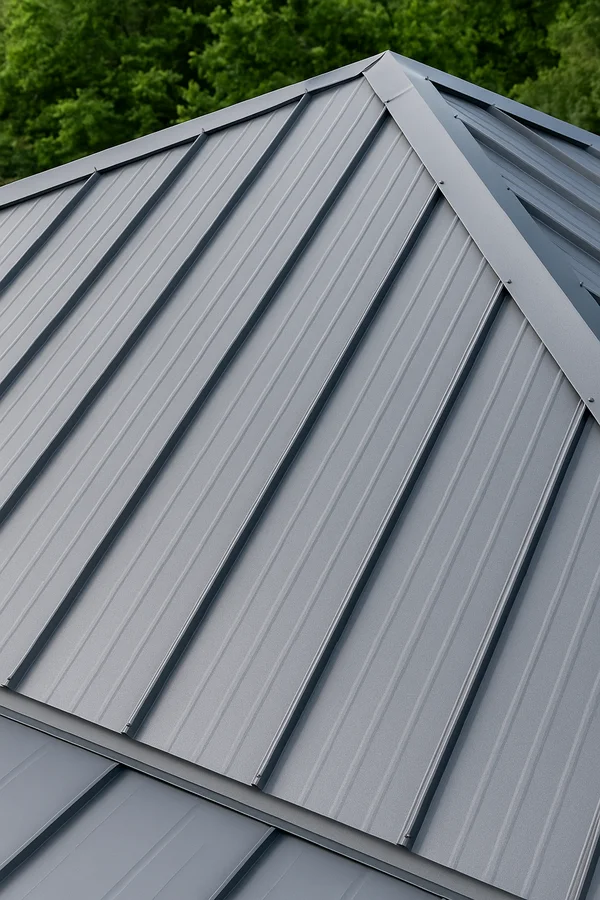
Standing Seam Metal Roofing Built for Texas Heat and Storms
Concealed fasteners, thermal-rated clips, and a 10-25 year warranty on every installation we complete.
Free estimate
Tell us what you need
Three fields. It reaches a person here, not a call centre.
What to expect
Get started
No obligation, no pressure. Just a straight answer and a fair price.
Call (832) 384-4420Request an estimateA standing seam metal roof is a fundamentally different system from what most homeowners picture when they think 'metal roofing.' The panels interlock at raised seams, and the fasteners are completely hidden beneath those seams, so no screw penetrates the weather surface. That single design decision eliminates the most common failure point on exposed-fastener metal roofs: the washer that degrades, the hole that allows water in. If you're researching whether a standing seam system is worth the investment in a Texas climate, the answer is yes for most homes, and we'll tell you exactly why when we walk your roof. PPB Roofs And Restoration is fully insured, carries a 5-star rating across 54 Google reviews, and backs every standing seam installation with a 10 to 25 year warranty. Call (832) 386-9606 to schedule a free inspection.
What drives the cost of a standing seam installation upward is gauge, profile width, panel finish, and roof complexity. A simple gable on a ranch home installs faster and costs less than a multi-plane hipped roof with multiple valleys and penetrations. Panel steel comes in 24-gauge and 26-gauge most commonly; 24-gauge is heavier, more rigid, and holds up better under hail impact. Profile width affects how many seams run across your roof and how the system handles thermal movement during Houston's extreme summer-to-winter temperature swings. We size the floating clip system to your specific roof geometry so panels can expand and contract without telegraphing stress cracks through the paint finish. Standing seam is also one of the most wind-resistant roof systems available, which matters considerably in Fort Bend County where hurricane-track storms are a real, recurring event. We also install solar attic ventilation as part of the same project when the attic situation calls for it, since a metal roof's reflectivity pairs well with active ventilation. Every job is different -- contact PPB Roofs And Restoration for an accurate estimate.
Why It Works
What Makes Standing Seam Different From Other Metal Roofs
The seam is the system -- everything else follows from that one engineering choice.
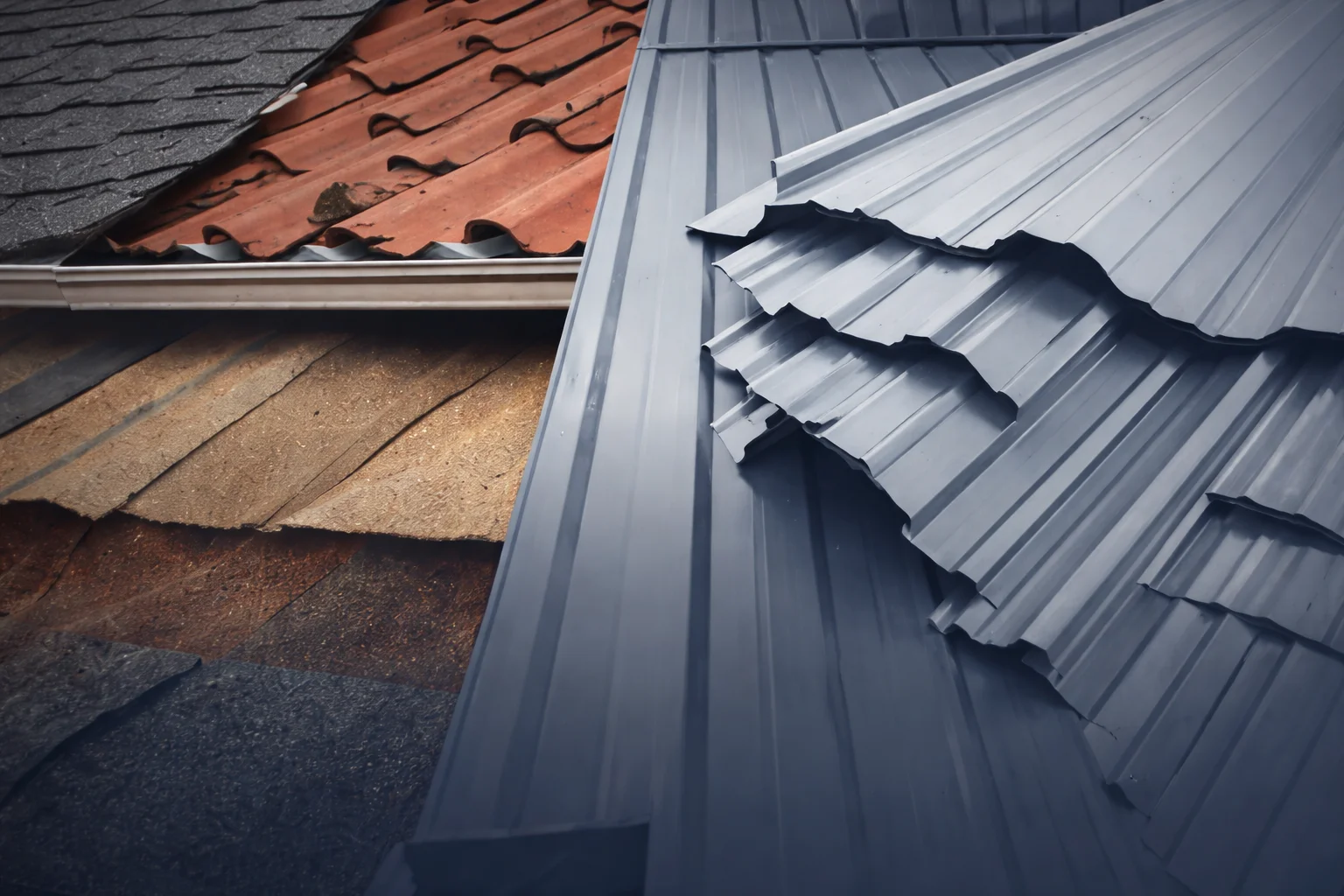
What a Standing Seam Installation Covers
Every item below is standard on a PPB installation -- not an upgrade you negotiate for.
- 01
Deck Inspection and Prep
We pull the existing material completely and inspect every inch of sheathing before the underlayment goes down. Soft spots get replaced. A standing seam system is only as good as what it's fastened to.
- 02
Underlayment and Ice-and-Water Shield
Synthetic underlayment rated for metal roofing goes down first. Ice-and-water shield runs at all eaves, every valley, and around every penetration -- not just at the drip edge where code requires it.
- 03
Panel Installation and Clip Spacing
Panels are installed with floating clips that allow thermal movement without stressing the seam. Clip spacing is calculated for your specific panel width and roof span, not guessed at.
- 04
Trim, Flashing, and Cleanup
Factory-formed trim pieces at every ridge, rake, and eave. Proper flashing at all pipe boots and penetrations. We run a magnet over the lawn twice before we leave -- standard practice on every job.
Our Process
How We Install a Standing Seam Roof
Three steps, no surprises.
Free Inspection and Material Spec
We walk the roof, measure every plane, note penetrations and slope changes, then specify gauge, profile, clip type, and finish. You see the full scope before anything is ordered.
Deck Prep and Underlayment
Tear-off happens first. Every soft or damaged sheathing board gets replaced. Synthetic underlayment and ice-and-water shield go down before a single panel touches the roof.
Panel and Trim Installation
Panels go up with concealed floating clips, factory trim at all edges and ridges, and proper flashing at every penetration. Final walk-through with you before we call it complete.
Standing Seam vs. the Alternatives -- an Honest Comparison
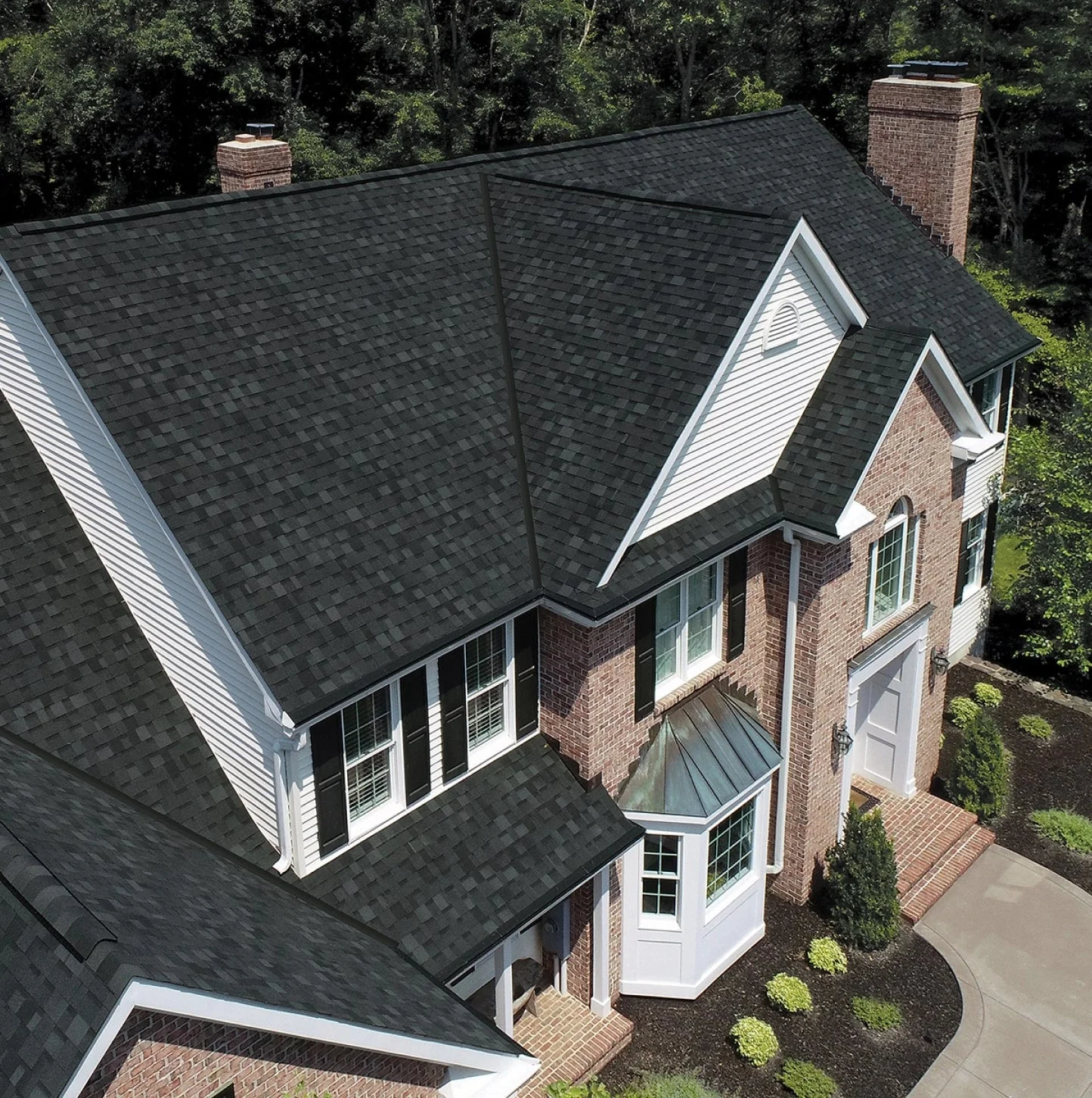
Knowing what you're giving up and what you're gaining is the only way to make a sound decision.
Key Benefits of Standing Seam Metal Roofing
Wind Resistance
Concealed fasteners and interlocking seams hold panel edges in place under high-wind loading. This matters in a region where tropical storm gusts regularly exceed 70 mph.
Thermal Movement Tolerance
Floating clips allow panels to expand and contract with temperature swings without buckling or cracking the finish. Houston's climate demands this -- 24-gauge steel moves measurably between seasons.
No Exposed Fastener Failures
Every screw that penetrates a roof surface is a future leak point. Standing seam eliminates that category of failure completely.
Energy Reflectivity
Light-colored metal panels reflect solar radiation rather than absorbing it. Paired with a Solar Attic Breeze install, the difference in attic temperature is significant.
Longevity
A properly installed 24-gauge standing seam system should outlast two or three asphalt shingle roofs. The 10 to 25 year warranty we carry reflects what the material actually does over time.
Insurance Consideration
Metal roofing can qualify for wind and hail credits with some carriers in Texas. We'll document your installation thoroughly so you have what your insurer needs to reassess your premium.
What PPB Roofs And Restoration Brings to a Metal Roof Project
- 01
Material Specification, Not Guesswork
We spec gauge, profile, clip type, and finish coat for your specific roof geometry and local wind exposure -- not whatever is in stock. A 26-gauge panel on a wide-span roof in a coastal-wind zone is the wrong call, and we'll tell you that upfront.
- 02
Fully Insured, Backed by Real Warranty
Every installation carries our 10 to 25 year warranty on both materials and workmanship. We're not a storm-chaser operation that leaves the county after the adjuster clears the claim. We're here, and our warranty has to mean something because we have to honor it.
- 03
Storm Damage Coordination if Applicable
If hail or wind is the reason you're replacing your roof, we handle the documentation and insurance coordination the same way we do on every storm damage project. The process is the same; the material is just a different tier.
Standing Seam Metal Roof -- Common Questions
Still have a question?
Ask the team directly. We pick up, and a straight answer costs nothing.
Is a standing seam metal roof actually better than an exposed-fastener metal roof?
What gauge steel should a standing seam roof in the Houston area use?
What does thermal movement mean for a metal roof, and why does it matter in Texas?
Will a standing seam roof help with my insurance premium in Texas?
What are the real disadvantages of a standing seam metal roof?
Can you install standing seam over my existing shingle roof?
How long does a standing seam metal roof installation take?
Standing Seam Metal Roof Installations Across Fort Bend County and Greater Houston
- Sugar Land, TX
- Katy, TX
- Rosenberg, TX
- Fulshear, TX
- Missouri City, TX
- Stafford, TX
- Pearland, TX
- Bellaire, TX
- Meadows Place, TX
- Brookside Village, TX
- Fort Bend County
Get a Free Standing Seam Metal Roof Inspection
Fully insured. 5-star rated. 10-25 year warranty on every install.