
Texans trust
Water Damage Restoration: Stop the Spread, Restore the Structure
IICRC-certified technicians, thermal imaging, and full insurance claim assistance from one insured crew.
Free estimate
Tell us what you need
Three fields. It reaches a person here, not a call centre.
What to expect
Get started
No obligation, no pressure. Just a straight answer and a fair price.
Call (832) 384-4420Request an estimateWater damage restoration is the process of extracting standing water, drying structural materials to measured moisture levels, and repairing whatever the water compromised, drywall, insulation, subfloor, ceiling joists, and the roof assembly above them. The longer water sits, the deeper it migrates and the more likely mold spore activation becomes, typically within 24 to 48 hours of saturation. Our IICRC-certified technicians respond to Fort Bend County homes 24 hours a day, seven days a week, and we carry a 10 to 25 year warranty on restoration work we complete. If you've got water in the structure right now, call (832) 386-9606, we pick up.
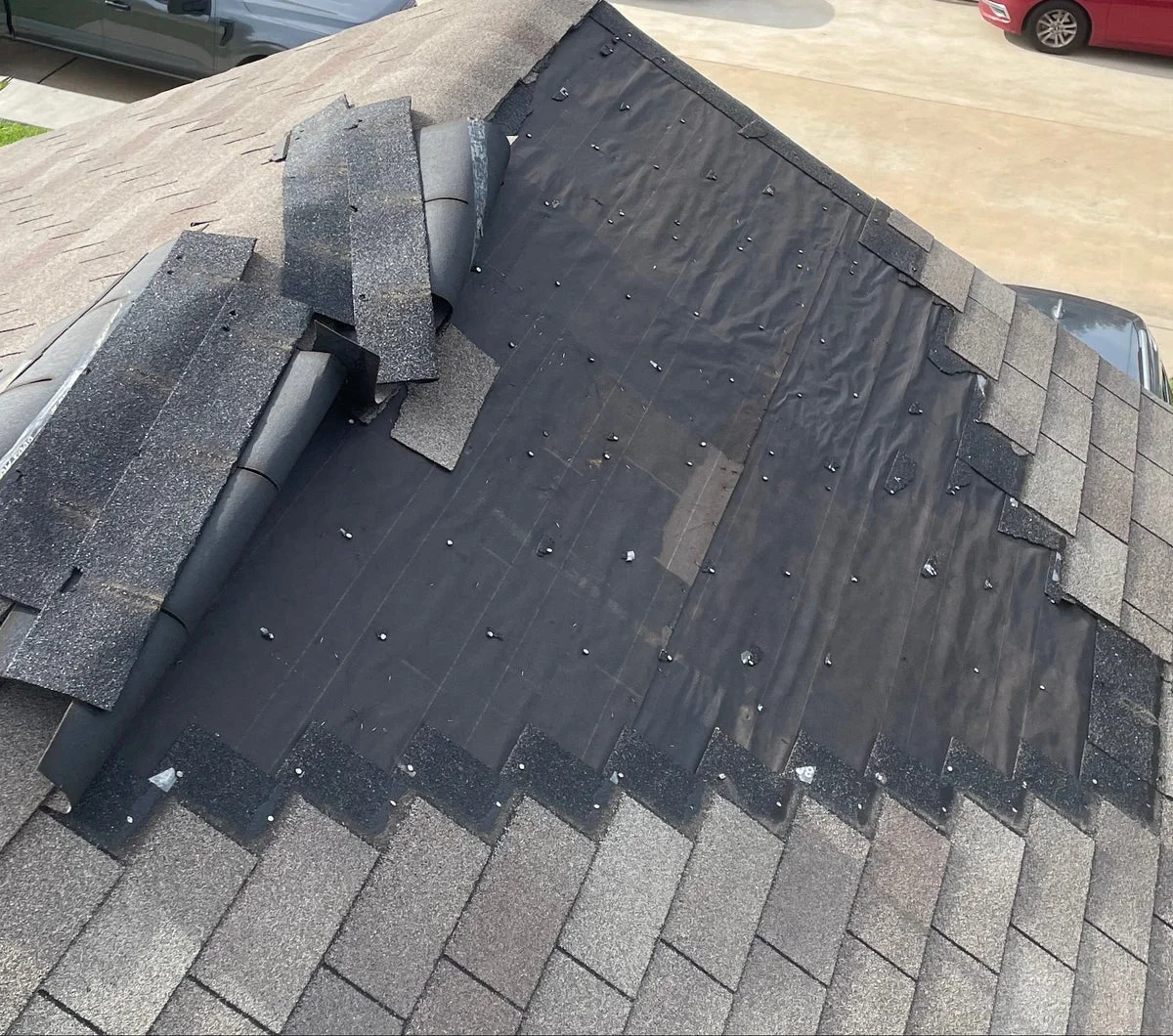
The connection between water damage and roofing is direct: most interior water intrusion starts at the roof line. A failed boot seal, missing shingles after a storm, or compromised flashing channels water into the attic, where it soaks insulation, saturates ceiling drywall, and works down into wall cavities before a single stain appears on your ceiling. Our process addresses both sides, the emergency roof repair that stops new water from entering and the interior mitigation that removes what's already there. We use thermal imaging cameras to locate hidden moisture pockets behind walls and in floor assemblies that a visual inspection would miss entirely. Every job is different, contact PPB Roofs And Restoration for an accurate estimate.
THE PROCESS
How We Handle Water Damage From First Call to Final Repair
Four ordered steps, no overlap, no skipped phases: because skipping drying to rush repairs is how you end up with mold behind new drywall.
- 01
Emergency Response and Source Control
We arrive, assess the active water source, and stop it. If the entry point is the roof, we deploy emergency tarp protection immediately so no additional water enters while we work inside. Appliance failures, plumbing breaks, and storm intrusion all require source control before extraction begins, starting the pumps first is a common mistake that wastes hours.
- 02
Moisture Mapping and Extraction
Thermal imaging cameras show us temperature differentials in walls, ceilings, and floors that indicate trapped moisture. We document every affected area with readings before extraction starts. Commercial-grade truck-mount extractors and portable units pull free-standing water first, then we transition to industrial air movers and desiccant dehumidifiers to drive out structural moisture down to acceptable dryness standards.
- 03
Structural Drying and Documentation
Drying is not done when the floor feels dry to the touch. It's done when moisture meters confirm that wall cavities, subfloor assemblies, and ceiling framing have returned to baseline readings for your specific material types. We take daily readings, log them, and share that documentation with your insurance carrier. This protects you from a denied claim and gives the adjuster exactly what they need.
INSURANCE
We Work Through Your Insurance Claim, Not Around It Insurance Claim

Signs Your Ceiling Stain Is More Than Cosmetic
Most homeowners call too late. Here's what to watch for before a cosmetic problem becomes a structural one.
Stain Edges That Keep Expanding
A dried stain with a fixed perimeter is old history. A stain whose rings keep spreading means water is still moving through the assembly, either from an active roof leak or a plumbing source that hasn't been located.
Ceiling Drywall That Feels Soft or Sags
Drywall loses structural integrity fast when saturated. A sagging or soft ceiling panel has already absorbed more than it can hold. That material needs to come out. Painting over it traps moisture and accelerates mold growth in the cavity behind it.
Musty Smell Without Visible Moisture
If you can smell mold but can't see water, it's inside the wall or ceiling cavity, exactly where our thermal imaging finds it. Mold colonies can establish within 48 hours of saturation at Texas summer temperatures. Don't wait on a smell.
Attic Insulation That's Matted or Discolored
Matted, dark, or compressed attic insulation means it absorbed water at some point. Wet insulation loses R-value immediately and holds moisture against the roof deck long after the rain stops, which is how decking rot starts. A roof inspection alongside water damage work catches this before the deck fails.
Bubbling or Peeling Paint on Interior Walls
Paint bubbles when the substrate behind it is wet. In Texas, that's almost always a roof penetration, a window flashing failure, or a plumbing supply line sweating against an exterior wall. The paint is telling you where the water is, but not where it started.
Buckled or Warped Wood Flooring
Wood flooring absorbs moisture from the subfloor below, not just from above. If flooring is buckling without an obvious spill source, water has migrated through the structure from a higher entry point. Fast drying within the first 48 hours can sometimes save the floor; after that, replacement is usually the call.
Why Roofing and Water Damage Work Should Go Through One Contractor
REVIEWS
What Fort Bend County Homeowners Say After the Job Is Done
Working with PPB Roofs & Restoration was a smooth process from start to finish. Communication was great the entire time, and they kept us updated throughout the project. The crew was professional, on time, and did an excellent job cleaning up afterward. The roof came out great and I’m very impressed. Definitely a company I would recommend to others.
Miranda GonzalesMay 2026 · Google
PPB Roof and Restoration were excellent on my roof replacement. They were not high pressure, nor did they try to up-sell on products I didn’t need. Their prices were more than fair. The entire process was easy and very straightforward. They completed our entire roof in one day. David my project manager and AJ the owner were both very helpful and responsive. We are very happy with the results and strongly recommend the company.
Bert & Diane MolinaMay 2026 · Google
Ayden Diaz and Prime Property Builders offered a complimentary inspection of my roof when they were doing some repairs in my neighborhood. They were nice and honest. They did not find much problem with my roof except normal wears and some nail holes. They came back the other day and caulked the holes for free to prevent possible leaking as heavy rains forecasted to come next day! I do appreciate their honest, consideration, and community spirit! I would do business with them in the future.
Xiao WangMay 2026 · Google
I was approached by several other roofing companies that did not help with my insurance claim. So, when AJ Diaz stopped by, it was difficult to believe that he would be different. However, he was very knowledgeable about the entire insurance process and about roofing products, so I let him start the process. I am very happy that I did. He walked me through every step of the process and kept me informed of where my claim stood and what I needed to do next. He was on-site during the insurance company inspection and helped me find an independent inspector when my claim went to arbitration. He was happy to take the time to answer all my many many questions. Once my claim was finally approved, he helped me select roofing products that were best for my house, had a good quality guarantee, and the color that I wanted. He was able to explain the difference in the products and how they were installed. So, I feel like I made an informed decision. I also had gutters replaced that made everything look so good with the new roof. See the pictures! AJ was also on-site during the installation and came back afterwards to make sure I was happy. I am so happy by the way everything turned out. I highly recommend him and his company.
Carol SumrallMay 2026 · Google
I am highly satisfied with the work completed by this company in the Houston area. From initial consultation through project completion, the entire process was managed with professionalism, efficiency, and attention to detail. What distinguished their service was the level of support provided after the installation. The team remained proactive in their follow-up, ensuring that all aspects of the project were functioning properly and that I was fully satisfied with the outcome. I would confidently recommend their services to anyone in Katy or the greater Houston area seeking high-quality roofing solutions and reliable, customer-focused service.
Avery CallejoApr 2026 · Google
Extremely happy with the service provided by Ayden and PPB PATIO & ROOF folks. Very reliable and honest. Will definitely recommend them to anyone looking to replace their roof.
KaiSoon TanApr 2026 · Google
Water Damage Questions We Actually Get Asked
Still have a question?
Ask the team directly. We pick up, and a straight answer costs nothing.
What does water damage restoration include beyond pumping out the water?
Can water-damaged drywall, flooring, or insulation actually be restored, or does it always need replacing?
How do I tell if water damage behind a wall or ceiling is permanent versus still active?
What should I do immediately after finding active water intrusion in my home?
Does water damage from a roof leak get covered under homeowners insurance?
How long does the drying phase of a water damage job typically take?
Active Water Damage in Your Home Right Now? Call Before It Spreads.
Every hour of delay is additional material saturation. Our IICRC-certified crew serves Fort Bend County seven days a week.