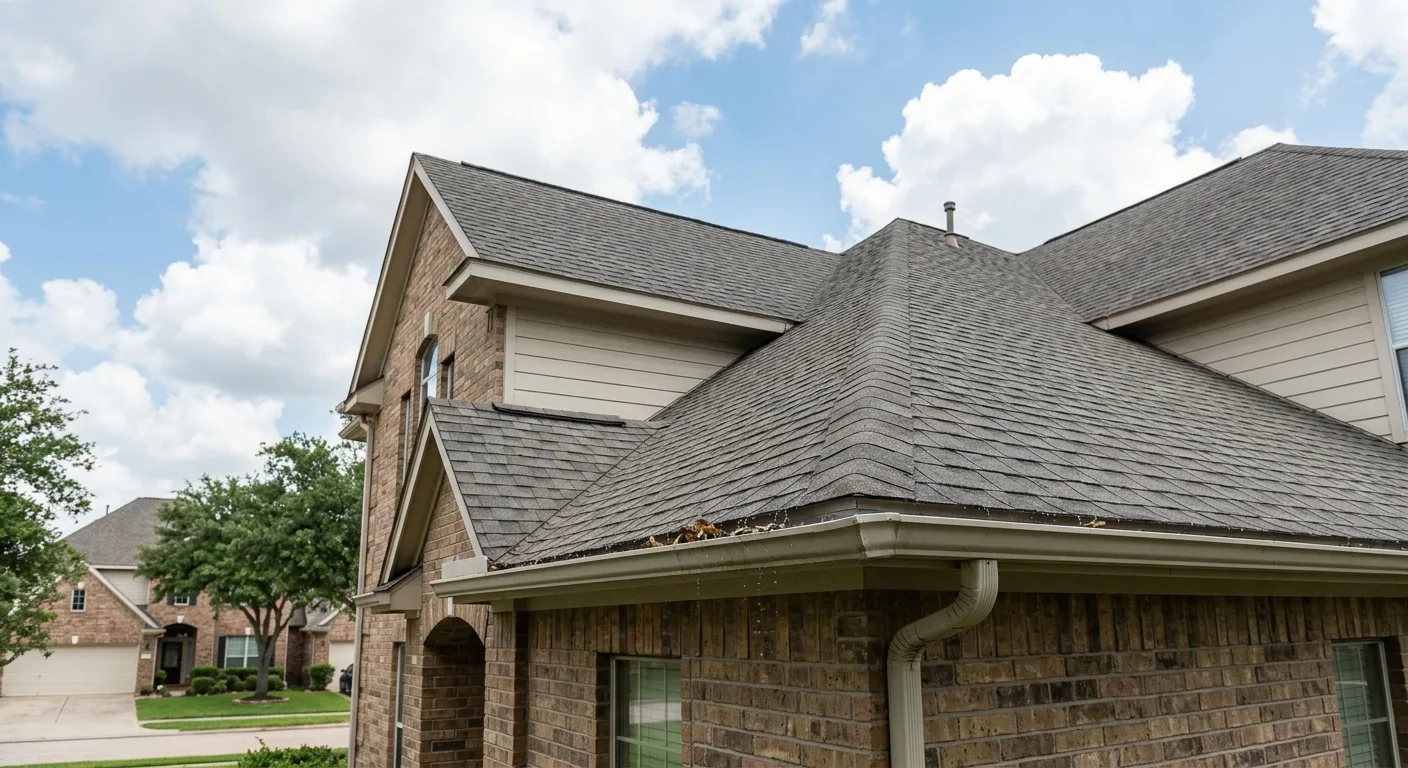
How to Tell If Your Soffit, Fascia, or Roofline Needs Repair
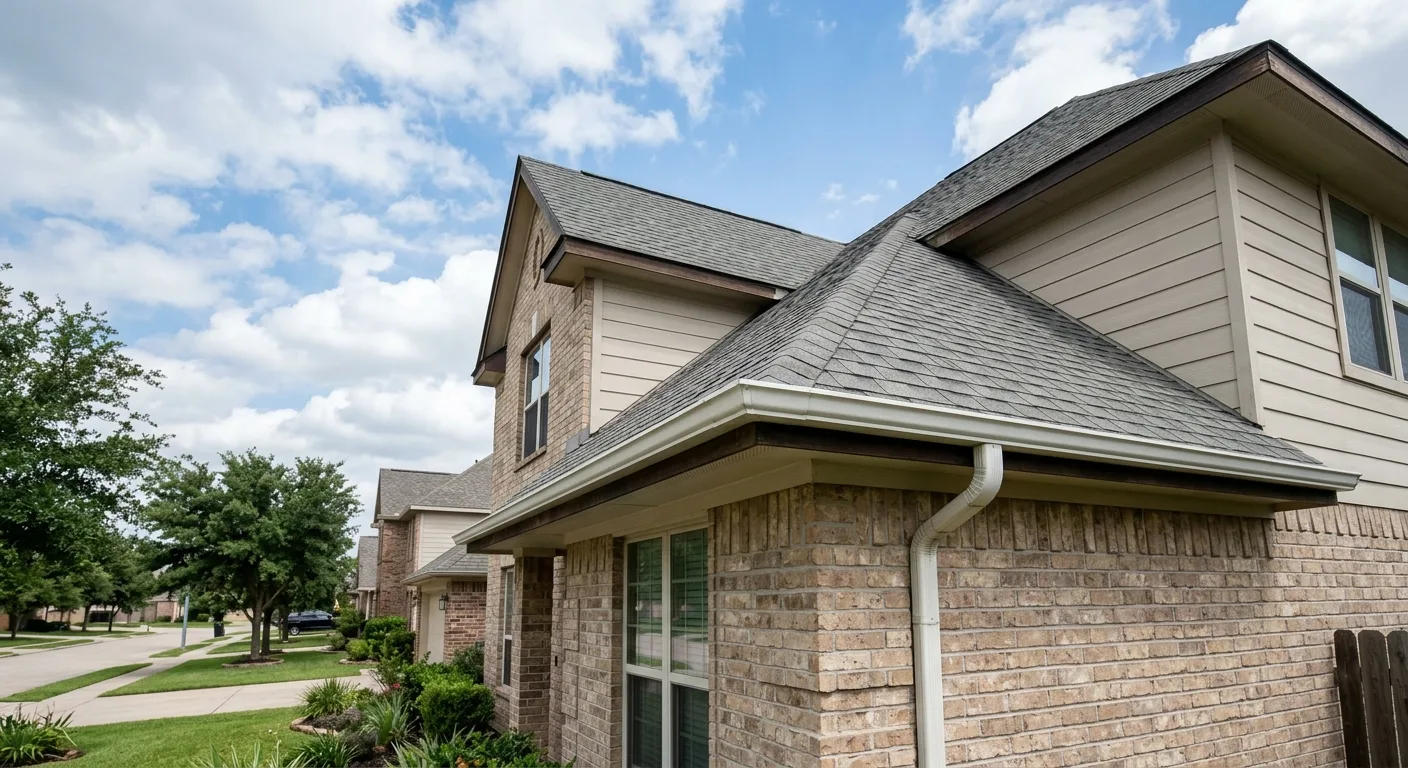
You can spot most soffit, fascia, and roofline damage from the ground using nothing but your eyes and a flashlight. Look for sagging panels, peeling paint, dark staining, and gaps where the roofline meets the wall. Any of those signs means moisture may already be working its way into your decking, attic framing, or interior walls.
What exactly are the soffit, fascia, and roofline?
The fascia is the vertical board that runs along the lower edge of your roof, right where the gutters attach. The soffit is the horizontal panel underneath the eave overhang, the part you see when you look up at your roof from the driveway. Together they seal the gap between your roof deck and the exterior wall, keep pests out, and allow your attic to breathe.
The term roofline refers to the full edge assembly: fascia, soffit, rake boards on the gabled ends, and the trim that ties it all together. When any one piece fails, the others are usually not far behind.
Why does this matter more right now in Fort Bend County?
October is the right moment to check. Hurricane season runs June through November, and Fort Bend County's spring and summer storm pattern brings repeated cycles of hail, high wind, and heavy rain. By the time fall arrives, many rooflines have taken months of punishment that never showed up as an obvious leak inside the house.
Our humidity accelerates wood rot faster than in drier climates. A fascia board that lost its paint coating in a hailstorm can absorb enough moisture to begin rotting within a single wet season. Once rot sets into the fascia, it spreads into the roof decking above it and the soffit beside it, and the repair scope grows quickly.
What are the warning signs I can see from the ground?
Walk the perimeter of your home slowly and look up. Bring a flashlight if the eaves are shaded. You are looking for these specific conditions:
- Sagging or bubbling soffit panels. Vinyl and aluminum soffit can warp or drop when the wood nailer behind it rots or when wind lifts and bends a panel away from its channel.
- Peeling, flaking, or missing paint on the fascia board. Bare wood on a fascia is not a cosmetic issue. It means the board is exposed to rain every time a storm moves through.
- Dark staining or streaks running down from the roofline. This usually means water is overflowing the gutters or seeping behind them, and it is sitting against the fascia long enough to stain the siding below.
- Visible gaps or cracks where the fascia meets the roof deck or the soffit. Gaps are entry points for wind-driven rain, wasps, and squirrels.
- Rust staining around gutter spikes or screws. Rust means the fasteners are failing. When gutters pull away from the fascia under the weight of standing water, the fascia board itself often splits or cracks.
- Soft or spongy texture if you can safely reach the soffit near a ladder-accessible corner. Press lightly with a finger. Healthy wood or vinyl is firm. Rot is immediately obvious.
- Missing sections of soffit panel. Wind can pop soffit channels loose. A missing section leaves your attic and roof deck open to rain and pests.
How do I check the roofline after a hailstorm?
After any significant storm, walk the ground-level check first. Hail leaves round, dented impact marks on aluminum soffit and fascia trim, similar to what it does to gutters. You may also see cracked paint or small splits in wood fascia where hailstones struck at an angle.
Pay particular attention to the rake boards on the gabled ends of your roof. These face directly into the prevailing southeast and southwest winds that Fort Bend County storms produce, and they take more direct impact than the overhangs facing down. Cracked caulk at the rake board seams is a common entry point for water.
If you see denting on your gutters, assume the fascia behind them took impact too. The gutter typically shields the top of the fascia during hail, but the exposed face of the board is still vulnerable. Our hail and storm damage roofing inspections always include the full roofline, not just the shingles.
What does gutter damage have to do with my fascia?
Your gutters are fastened directly to the fascia board. When gutters clog, sag, or separate from the roofline, they hold standing water against the fascia for hours after each rain. That standing water is the single most common cause of fascia rot in the Richmond, Sugar Land, and Katy areas, where afternoon storms can drop two to three inches of rain in under an hour and overwhelm slow-draining gutters quickly.
Checking your gutters is part of any honest roofline inspection. If the gutters are pulling away from the fascia, or if you see a gap between the back of the gutter and the board, water is getting behind the gutter every rain. Our gutter installation and replacement service often goes hand in hand with fascia repair for exactly this reason.
Can I tell from the ground if the damage is cosmetic or structural?
Some signs are clearly cosmetic. A small area of peeling paint with solid wood underneath is a surface issue. But most of the warning signs listed above point to something deeper, because by the time rot or warping is visible from the ground, it has usually been developing for weeks or months.
A rough rule: if you see staining, softness, gaps, or missing sections, treat it as potentially structural until a contractor can confirm otherwise. The cost difference between catching early rot and repairing rot that has reached the decking or wall sheathing is significant. A free roof inspection from a qualified contractor will tell you exactly what you are dealing with, including a written assessment of the roofline condition.
What about the areas I genuinely cannot see from the ground?
The top of the fascia board, where it tucks under the drip edge and roof deck, is not visible from the ground. Neither is the condition of the nailers and blocking inside the eave assembly. These areas can be rotting while the face of the fascia still looks acceptable from twenty feet away.
This is where a drone inspection or a contractor's ladder inspection becomes important. A written roof inspection report should document the roofline from multiple angles, not just the shingle field. If your inspector did not look at the fascia, soffit, and rake boards, you do not have a complete picture of your roof system's health.
When does roofline damage turn into an emergency?
A missing soffit panel or a fascia board that has separated from the deck is an open entry point for rain every time a storm passes. Fort Bend County's fall rain pattern, driven by Gulf moisture and frontal systems, means a gap that is harmless on a dry October day can let in inches of water by November.
If you have a section of soffit or fascia that is actively separated or missing, do not wait for a full repair estimate before protecting it. Temporary protection matters. Our emergency roof repair service is available when storm damage leaves your roofline exposed and rain is in the forecast.
Does homeowners insurance cover soffit and fascia damage?
It depends on the cause and your specific policy. Damage caused by a covered storm event, such as hail or wind, is often covered, but every policy has its own terms, exclusions, and deductible structure. Gradual deterioration or maintenance-related rot is typically not covered.
The most important thing you can do after a storm is document the damage with photographs before any repairs begin, and report it to your insurer promptly. If you are unsure whether the damage is storm-related or wear-related, a contractor's written assessment can help clarify the cause. For questions about what your specific policy covers or how to navigate a disputed claim, your insurer, a licensed public adjuster, or an attorney is the right resource.
How do soffit and fascia repairs connect to the rest of my roof system?
The roofline is not a separate system. The fascia anchors your gutters, the soffit vents your attic, and the drip edge that sits on top of the fascia directs water away from the deck. When one component fails, it creates conditions that stress the others.
Blocked or damaged soffit vents reduce attic airflow, which drives up attic temperatures and shortens shingle life in Fort Bend County's intense summer heat. Poor fascia condition means gutters hang improperly, which means water does not clear the foundation correctly. A complete roof repair assessment always looks at the full edge system, not just the most visible damage.
Frequently asked questions
How often should I inspect my soffit and fascia?
A visual ground-level check after every significant storm is a good habit. A more thorough inspection by a contractor once a year, ideally in fall before the wetter months, gives you a baseline and catches developing problems early. Fort Bend County's storm activity makes annual checks particularly worthwhile.
What is the difference between wood and vinyl soffit and fascia, and does it affect how they fail?
Wood fascia and soffit are more common on older homes and are susceptible to rot when the paint barrier breaks down. Vinyl and aluminum versions resist rot but can crack under hail impact and warp in extreme heat. Both materials can fail at their fasteners and joints, so the inspection process is similar regardless of material.
My soffit has small holes that look like they were drilled. Is that damage?
Small round holes in soffit are sometimes ventilation perforations built into the panel, which is normal. But if the holes are irregular, have ragged edges, or appear in clusters, that is a sign of pest activity, most commonly wasps, carpenter bees, or squirrels. Pest entry through soffit damage should be addressed before any repair, otherwise the same problem recurs.
Can I repair a small section of fascia myself?
Replacing a short section of painted wood fascia is within range for a confident DIYer if you can safely reach it. The challenge is that rot rarely stops at the visible boundary, and a partial repair that leaves rotted wood behind will fail again within a season. Having a contractor probe the full length of the affected board first is worth the step, especially before you spend time on materials and paint.
If I replace my roof, will the fascia and soffit be replaced too?
Not automatically. A roof replacement typically covers the shingle field, underlayment, decking if needed, flashings, and drip edge. Soffit and fascia replacement is usually a separate scope of work. Ask your contractor explicitly what the proposal includes and get the roofline documented separately if you want a complete picture before signing anything.
If you are not sure what your roofline is telling you, the easiest next step is a free inspection. Call PPB Roofs And Restoration at (832) 384-4420 or schedule online. We serve Richmond, Fulshear, Sugar Land, Katy, Rosenberg, Missouri City, Sienna, Needville, Simonton, and the surrounding Fort Bend County area. We will tell you exactly what we find, in plain language, with no obligation to hire us.