How Long Does a Roof Last in Texas? Fort Bend County Guide
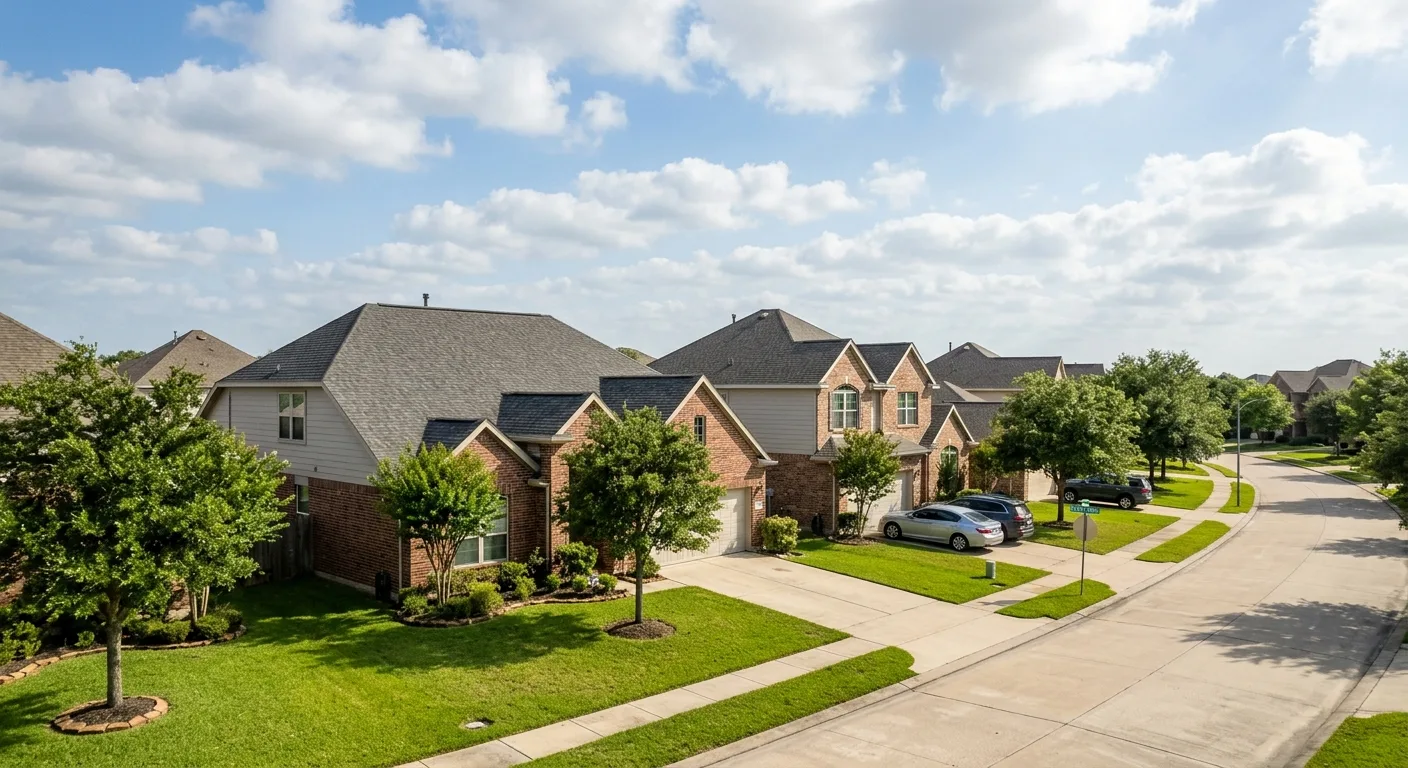
In Texas, most asphalt shingle roofs last somewhere between 15 and 25 years, and some fall short of that range. The lifespan figures printed on shingle packaging are tested under generalized conditions, not the specific punishment Fort Bend County delivers every single year. If you are standing in Fulshear, Richmond, Sugar Land, or anywhere else along the Gulf Coast plain and wondering whether your roof has enough life left to carry you through the next few storm years, the honest answer depends on your material, your roof's age, and the climate stressors it has already absorbed.
Why does Texas shorten roof lifespan compared to national averages?
Texas subjects roofs to several damaging forces at once, and Fort Bend County gets nearly all of them. Most shingle manufacturers develop lifespan ratings in climates with moderate UV, low humidity, and infrequent severe weather. Our climate is essentially the opposite on every point.
The four stressors that matter most here are:
- UV intensity and heat. Summer attic temperatures in this region routinely climb well above the outdoor air temperature. That sustained heat accelerates the oxidation of asphalt binders, which is what makes shingles brittle and granule-shedding over time.
- High humidity and cycling moisture. Fort Bend County's Gulf Coast humidity means roofing materials expand and contract repeatedly as temperatures swing from cool mornings to hot afternoons and back again. That cycling works at seams, flashings, and adhesive strips every single day.
- Spring hail season. The corridor from the Hill Country through the Houston metro sees repeated hail activity most years. Even hail that does not punch through a shingle can fracture the mat underneath, strip granules, and leave the asphalt layer exposed to UV long before any visible crack appears.
- Hurricane-season wind events. Hurricane season runs June through November. Even storms that do not make direct landfall send sustained winds and wind-driven rain across Fort Bend County that stress lifted edges, nails, and valley flashings.
None of those stressors appears in isolation. A roof that catches a hail event in spring, bakes through three months of 95-plus-degree weather, and then faces tropical-system winds in fall is aging years faster than its packaging suggests.
How long do common roofing materials actually last in Fort Bend County?
Every roofing material performs differently here, and realistic local ranges differ from what you may have read elsewhere. The ranges below reflect typical performance in Gulf Coast conditions, not guarantees.
- 3-tab asphalt shingles: Nationally rated for 20 to 25 years. In Fort Bend County, 10- 14 years is more realistic for a well-installed roof that avoids major storm events. Unfortunately most homes are built with poor roof ventilation. so shingles are essentially cooked from the sun and the hot attic they sit over. Which can lead to more premature granular loss. These thinner shingles have less granule depth to sacrifice and crack sooner under UV load.
- Architectural (dimensional) asphalt shingles: Nationally rated for 25 to 30 years or more. Locally, expect 12-15 years under normal conditions, less if the roof has taken significant hail strikes or wind events. Typically we see roofs are more likely to go through insurance if they below 14 years. It is all dependent on granular loss and if an actual storm even caused any damage to the asphalt matting.
- Class 4 impact-resistant shingles: These are built with a reinforced mat designed to resist hail fracture. Homeowners who invest in them here can reasonably expect to stay closer to the upper end of the manufacturer's rated range, provided the roof is maintained and inspected after major storms.
- Metal roofing (standing seam): A properly installed standing seam metal roof is the longest-lasting common option in this climate. Typical ranges run 40 to 70 years, and metal sheds hail energy better than asphalt while reflecting heat rather than absorbing it. The upfront cost is higher, but the lifespan math often favors it for homeowners who plan to stay long-term.
- Flat and low-slope roofing (TPO, modified bitumen): Common on commercial properties and some Fort Bend County homes with flat sections, these materials typically last 15 to 25 years depending on the membrane type, installation quality, and how well drainage is maintained. Learn more on the flat roof repair and replacement page.
Does the age on paper match the actual condition of the roof?
Not always, and that is the most important practical point. A 12-year-old roof that absorbed two significant hail events without proper repair or inspection can be in worse functional shape than a 20-year-old roof that was maintained carefully and never took direct impact damage. Age is a starting point for the conversation, not the whole answer.
What actually determines remaining useful life is the condition of these specific components:
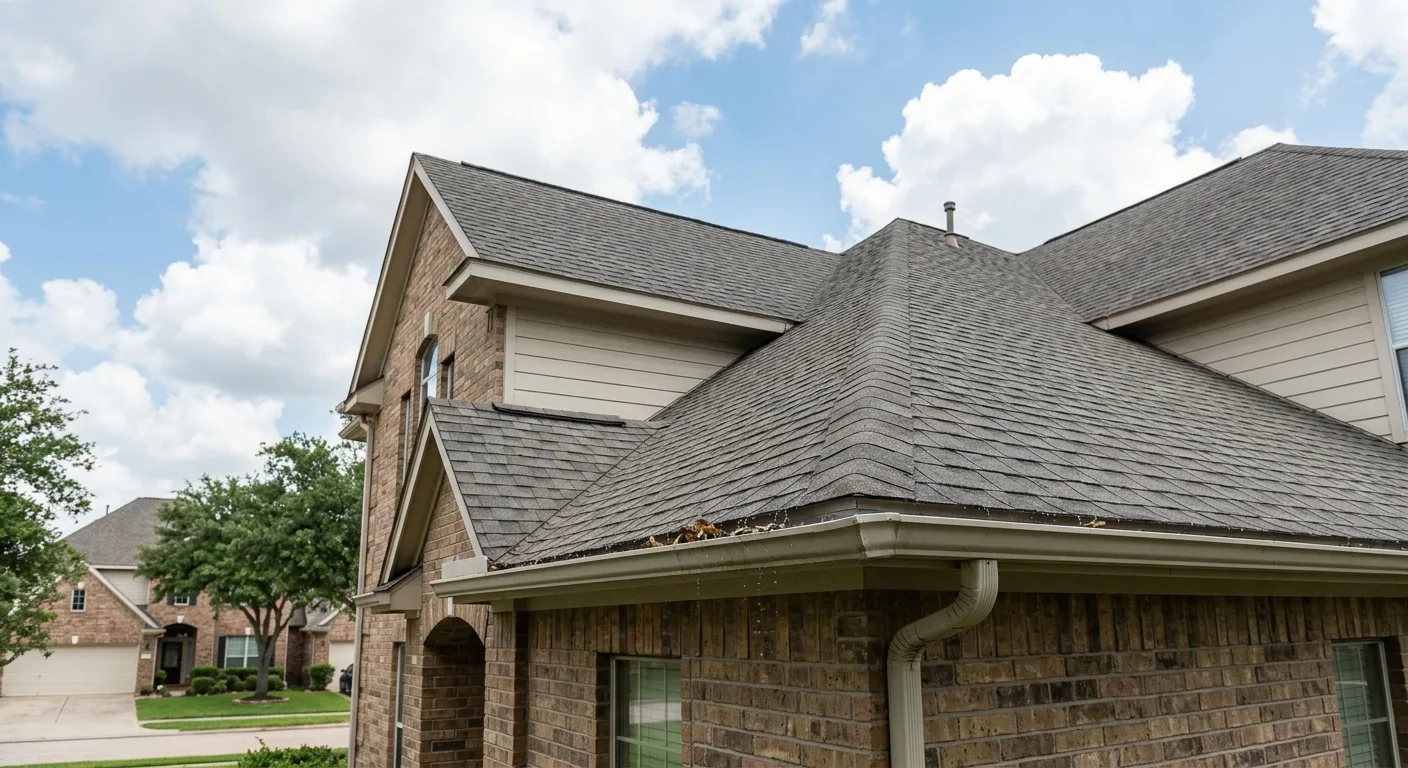
- Granule coverage: heavy granule loss in the gutters or bare patches on the shingles signal accelerated aging
- Shingle mat integrity: hail fractures the mat below the surface, which is not visible from the driveway
- Flashing condition at valleys, chimneys, pipe boots, and wall transitions
- Decking integrity: soft spots indicate moisture has already reached the wood layer
- Attic ventilation: poor ventilation drives up deck temperatures and speeds shingle deterioration from below
A professional roof inspection looks at all of these, not just shingle age. If you want a written record, a roof inspection report documents conditions with photos so you have something to reference whether you are planning maintenance, talking to your insurer, or deciding between repair and replacement.
What shortens a Fort Bend County roof's life the most?
Several factors consistently come up when we look at roofs that failed well before their expected lifespan.
Deferred repairs. A small leak at a pipe boot or flashing seam seems minor. Left unaddressed through a summer of rain cycles, it wets the decking repeatedly, promotes mold in the attic, and compromises the sheathing that holds shingle nails. What would have been a simple repair becomes a partial or full replacement. If you have a current leak, the roof repair services page explains your options.
Poor original installation. Shingles nailed too high, insufficient underlayment, inadequate flashing at transitions, and improper ventilation all reduce lifespan regardless of the material's rated life. Installation quality matters as much as product selection.
Skipped maintenance. Gutters that overflow regularly deposit standing water at the eave line, which works under starter strips and contributes to rot. Clogged gutters also add weight and pull fascia away from the decking. Keeping gutters clean is one of the simplest ways to protect roof lifespan.
Unrepaired storm damage. Hail that does not cause an immediate leak still ages a roof faster by fracturing the shingle mat and exposing asphalt. If you have had hail events in recent years and have not had a professional assessment, the clock on your roof may be running faster than you realize.
How do I know if my roof needs replacement or just repairs?
The general rule: if the roof is past two-thirds of its expected lifespan and has widespread granule loss, multiple damaged areas, or decking issues, replacement is usually the more cost-effective path. If the roof is in the first half of its lifespan with isolated damage, targeted repair makes sense. The tricky zone is the middle third, where the decision depends on the extent and type of damage, the material still in place, and your plans for the home.
November is a reasonable time to make this call. Hurricane season winds down at the end of November, and assessing the roof before winter gives you time to plan and budget before the following spring hail season begins. If a storm event left you with an active situation, storm response roofing services are available for urgent assessments and emergency work.
Can regular maintenance actually extend my roof's life?
Yes, meaningfully. Small maintenance steps done consistently add years to a roof's functional life. The most effective ones for Fort Bend County homes are:
- Annual or post-storm professional inspection to catch damage before it compounds
- Gutter cleaning at least twice a year, more often if you have heavy tree cover
- Prompt repair of any flashing gaps, lifted shingles, or compromised pipe boots
- Verifying attic ventilation is working, since heat trapped in the attic degrades decking and shingles from below
- Trimming tree limbs that overhang the roof, which reduces debris buildup and physical abrasion during wind events
The Prime Protection Plan annual membership is designed around this idea: scheduled maintenance and inspections so small problems get caught before they become expensive ones.
Frequently asked questions
Does the humidity in Fort Bend County actually affect shingles, or is UV the bigger issue?
Both matter, and they work together. UV degrades the asphalt binders that hold granules in place, while humidity drives moisture cycling that stresses seams and flashings. In this climate you cannot isolate one as the single culprit. Roofs here deal with both simultaneously, which is part of why realistic lifespans are shorter than national averages.
My roof is 15 years old and had no known storm damage. Should I be planning for replacement soon?
At 15 years, a Fort Bend County asphalt shingle roof is approaching the range where condition becomes more important than age alone. A professional inspection at this point gives you a clearer picture of remaining granule depth, flashing integrity, and whether any hidden hail fracture has occurred. That information lets you plan on your timeline rather than react in an emergency.
Will my homeowner's insurance cover a roof that is worn out from age?
Policies generally cover sudden, storm-caused damage rather than gradual wear and tear. Whether a specific claim is covered depends on your individual policy terms, the age and condition of the roof, and how the damage is categorized. For questions about your coverage, contact your insurer directly, and consider speaking with a licensed public adjuster if you need guidance on a claim.
Is a metal roof actually worth the extra cost in this area?
For homeowners who plan to stay in their home for a long time, a standing seam metal roof often makes financial sense in this climate. It resists hail impact better than asphalt, reflects heat rather than absorbing it, and can last two to three times as long as a standard shingle roof. The decision depends on your budget, how long you plan to stay, and whether your insurer offers a discount for impact-resistant materials.
What is the difference between a roof tune-up and a full inspection?
A tune-up typically involves minor repairs to flashings, caulking, and other components that commonly fail first, while an inspection is an assessment of overall condition without necessarily making repairs. Some homeowners benefit from both: an inspection to understand the roof's current state, then targeted maintenance work to address what is found. We offer both services separately so you can choose what fits your situation.
If you are not sure where your roof stands heading into the off-season, I am glad to take a look at no charge. Call us at (832) 384-4420 or schedule a free inspection online. We will give you a straight answer on what we find, and a written report if you want one, so you can make a confident decision about what comes next.